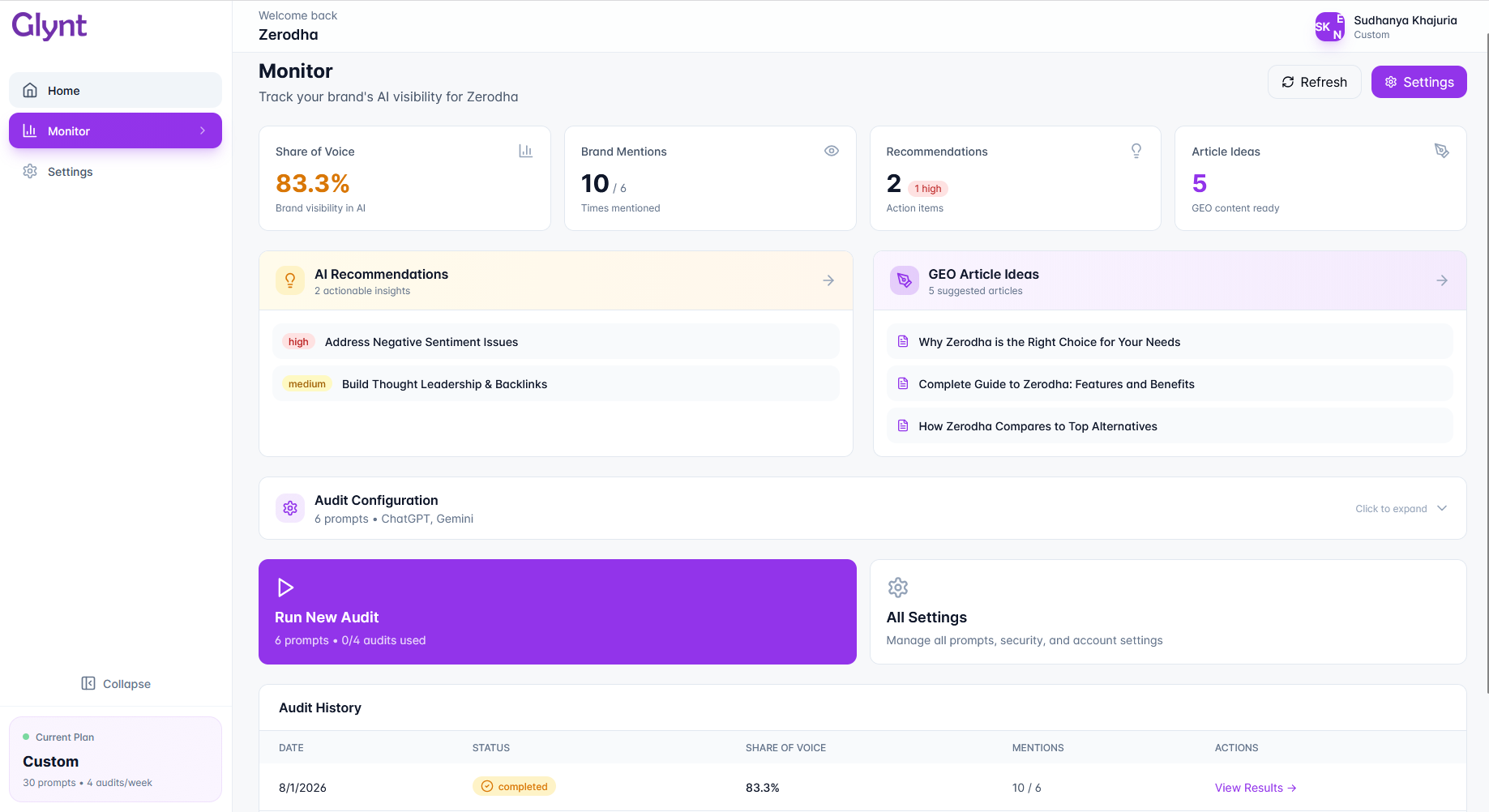
Generative Engine Optimization (GEO) is the practice of improving a brand’s visibility, accuracy, and presence inside AI-generated answers across platforms like ChatGPT, Gemini, Perplexity, and Copilot. As 2026 becomes the first truly AI-first discovery year, GEO is now essential for brand visibility.
LythouseLabs, a leader in applied AI systems, and Glynt, its GEO-focused optimization platform, help companies strengthen their generative search presence through automated entity analysis, structured recommendations, and AI-driven visibility scoring. Together, they give brands the tools to be seen, understood, and cited inside generative engines.
Why GEO Matters in 2026
AI systems now deliver complete answers. They don’t just point to links; they synthesize information. Brands must therefore be understood as entities, not simply indexed as pages. GEO ensures companies show up correctly and consistently in AI-generated outputs.
How Generative Engines Work
Modern LLMs generate answers using:
● Real-time retrieval
● Entity and relationship mapping
● Model knowledge
● Structured signals
GEO improves these signals so engines can confidently reference your brand.
The GEO Framework (2026 Model)
1. Entity Audit
2. Knowledge Graph Reinforcement
3. Answer-Ready Content
4. Citation Expansion
5. AI Presentation Monitoring
Platforms like Glynt automate much of this process, providing actionable steps to improve AI visibility.
What Content Works Best for GEO
● Definitive explainers
● Structured guides
● Glossaries
● Research snippets
● Schema-backed articles
These formats are heavily favored by AI systems.
Key GEO Signals
● Schema (FAQ, HowTo, Organization)
● Consistent entity naming
● Authoritative references
● Clear internal linking
Glynt evaluates these signals and provides improvement paths.
The Future of GEO
As AI-generated answers dominate search, LythouseLabs and Glynt position brands to thrive inside this new discovery ecosystem.